PainWorth is a justice, legal and insurance services application founded by Canadian entrepreneurs Mike Zouhri, Chris Trudel and Ryan Bencic. The application is a "robot lawyer" that uses artificial intelligence to automate personal injury claims for injury victims. It is currently available in Canada and the United States. PainWorth has been featured by several news outlets, including CTV, Global News, CBC, and has also been featured by the American Bar Association and LexisNexis for its role addressing social issues such as access to justice and other systemic issues in the legal and insurance industry. == Application == PainWorth began as a tool for calculating non-pecuniary damages for injury victims but has since expanded beyond a personal injury calculator to include features that help injury victims and business users with pecuniary damages, economic calculations, prescribed rates and providing informational guides to help navigate settlement negotiation, managing claims records and other issues encountered by self-represented litigants or claims managers. The platform makes use of automation to provide free user-guided calculations, steps and processes to successfully settle an injury claim. The application is supported by Microsoft Azure. == Personal Injury Calculator == PainWorth is the first service to use Artificial Intelligence to interpret case law in order to determine the value of pain and suffering incurred by specific injury types and injury severities. The cited case law is used as evidence and presented in statistical models to determine an accurate valuation compliant with the jurisdiction, regulatory rules and case complexities. == General Damages Calculator == PainWorth also offers a personal injury settlement calculator that assesses general damages based on specific case complexities and jurisdiction. The service takes into account medical complications and recovery in order to calculate the fair valuation. == Injury Settlement Platform == PainWorth insurance settlement platform facilitates a direct and automated way resolution center to settle cases for their assessed value without enduring the hardship of litigation. In 2021, Painworth won the title of World's Best Emerging Insurance Product for the development of this platform. == History == In 2019, Mike Zouhri was struck by a drunk driver which left him seriously injured and resulted in a lawsuit. Frustrated by the slow and expensive process, Zouhri went down to the law library and learned how to manage injury claims. After learning the process, he partnered lawyers and legal advisors to create an app to allow users to quickly settle their own injury claims fairly and accurately. Immediately after its launch, PainWorth quickly became widely used by thousands of users and gained significant media coverage. Global News reported that the bot had successfully helped people with more than $10 million in claims in only a few short months, all free of charge. In July 2020, PainWorth began raising concern over injustices and gender bias in the legal system. in Canadian courts.
Umoove
Umoove is a high tech startup company that has developed and patented a software-only face and eye tracking technology. The idea was first conceived as an attempt to aid people with disabilities but has since evolved. The only compatibility qualification for tablet computers and smartphones to run Umoove software is a front-facing camera. Umoove headquarters are in Israel on Jerusalem’s Har Hotzvim. Umoove has 15 employees and received two million dollars in financing in 2012. The company's original founders invested around $800,000 to start the business in 2010. In 2013 Umoove was named one of the top three most promising Israeli start ups by Newsgeeks magazine. The company also participated in the 2013 LeWeb conference in Paris, France, where innovative technology startups are showcased. == Technology == The technology uses information extracted from previous frames, such as the angle of the user's head to predict where to look for facial targets in the next frame. This anticipation minimizes the amount of computation needed to scan each image. Umoove accounts for variances in environment, lighting conditions and user hand shake/movement. The technology is designed to provide a consistent experience, whether you're in a brightly lit area or a darkened basement, and to work fluidly between them by adapting its processing when it detects color and brightness shifts. It uses an active stabilization technique to filter out natural body movements from an unstable camera in order to minimize false-positive motion detection. Running the Umoove software on a Samsung Galaxy S3 is said to take up only 2% CPU. Umoove works exclusively with software and there is no hardware add-on necessary. It can be run on any smartphone or tablet computer that has a front-facing camera. Umoove claims that even a low-quality camera on an old device will run their software flawlessly. == Umoove Experience == In January 2014 Umoove released its first game onto the app store. The Umoove Experience game lets users control where they are 'flying' in the game through simple gestures and motions with their head. The avatar will basically go toward wherever the user looks. The game was created to showcase the technology for game developers but that did not stop some from criticizing its simplicity. Umoove also announced that they raised another one million dollars and that they are opening offices in Silicon Valley, California. In February 2014, Umoove announced that their face-tracking software development kit is available for Android developers as well as iOS. == Reviews == The Umoove Experience garnered mostly positive reviews from bloggers and mainstream media with some predicting that it could be the future of mobile gaming. Mashable wrote that Umoove's technology could be the emergence of gesture recognition technology in the mobile space, similar to Kinect with console gaming and what Leap Motion has done with desktop computers. Some, however, remain skeptical. CNET, for example, did not give the game a positive review and called the eye tracking technology 'freaky but cool'. They also noted that pioneering technologies have been known to fall short of expectations, citing Apple Inc’s Siri as an example. The technology blog GigaOM said that the Umoove Experience is ’awesome’ and technology evangelist Robert Scoble has called Umoove "brilliant". == uHealth == In January 2015, Umoove released uHealth, a mobile application that uses eye tracking game-like exercise to challenge the user's ability to be attentive, continuously focus, follow commands and avoid distractions. The app is designed in the form of two games, one to improve attention and another that hones focus. uHealth is a training tool, not a diagnostic. Umoove has stated that they want to use their technology for diagnosing neurological disorders but this will depend on clinical tests and FDA approval. The company cites the direct relationship between eye movements and brain activity as well as various vision-based therapies have been backed by many scientific studies conducted over the past decades. uHealth is the first time this type of therapy is delivered right to the end user through a simple download. == Collaboration rumors == In March 2013 there were rumors on the internet that Umoove would be the functioning software embedded into the Samsung Galaxy S4, which was due to launch that month. This rumor was perpetrated by, among others, New York Times, Techcrunch and Yahoo. Once Samsung launched without the Umoove technology rumors about a potential collaboration with Apple Inc hit the web. It has been said that due to the fact that Apple Inc is losing market share and stock value to Samsung they will be more aggressive and eye tracking is a logical place to make that move.
Meta-learning (computer science)
Meta-learning is a subfield of machine learning where automatic learning algorithms are applied to metadata about machine learning experiments. As of 2017, the term had not found a standard interpretation, however the main goal is to use such metadata to understand how automatic learning can become flexible in solving learning problems, hence to improve the performance of existing learning algorithms or to learn (induce) the learning algorithm itself, hence the alternative term learning to learn. Flexibility is important because each learning algorithm is based on a set of assumptions about the data, its inductive bias. This means that it will only learn well if the bias matches the learning problem. A learning algorithm may perform very well in one domain, but not on the next. This poses strong restrictions on the use of machine learning or data mining techniques, since the relationship between the learning problem (often some kind of database) and the effectiveness of different learning algorithms is not yet understood. By using different kinds of metadata, like properties of the learning problem, algorithm properties (like performance measures), or patterns previously derived from the data, it is possible to learn, select, alter or combine different learning algorithms to effectively solve a given learning problem. Critiques of meta-learning approaches bear a strong resemblance to the critique of metaheuristic, a possibly related problem. A good analogy to meta-learning, and the inspiration for Jürgen Schmidhuber's early work (1987) and Yoshua Bengio et al.'s work (1991), considers that genetic evolution learns the learning procedure encoded in genes and executed in each individual's brain. In an open-ended hierarchical meta-learning system using genetic programming, better evolutionary methods can be learned by meta evolution, which itself can be improved by meta meta evolution, etc. == Definition == A proposed definition for a meta-learning system combines three requirements: The system must include a learning subsystem. Experience is gained by exploiting meta knowledge extracted in a previous learning episode on a single dataset, or from different domains. Learning bias must be chosen dynamically. Bias refers to the assumptions that influence the choice of explanatory hypotheses and not the notion of bias represented in the bias-variance dilemma. Meta-learning is concerned with two aspects of learning bias. Declarative bias specifies the representation of the space of hypotheses, and affects the size of the search space (e.g., represent hypotheses using linear functions only). Procedural bias imposes constraints on the ordering of the inductive hypotheses (e.g., preferring smaller hypotheses). == Common approaches == There are three common approaches: using (cyclic) networks with external or internal memory (model-based) learning effective distance metrics (metrics-based) explicitly optimizing model parameters for fast learning (optimization-based). === Model-Based === Model-based meta-learning models updates its parameters rapidly with a few training steps, which can be achieved by its internal architecture or controlled by another meta-learner model. ==== Memory-Augmented Neural Networks ==== A Memory-Augmented Neural Network, or MANN for short, is claimed to be able to encode new information quickly and thus to adapt to new tasks after only a few examples. ==== Meta Networks ==== Meta Networks (MetaNet) learns a meta-level knowledge across tasks and shifts its inductive biases via fast parameterization for rapid generalization. === Metric-Based === The core idea in metric-based meta-learning is similar to nearest neighbors algorithms, which weight is generated by a kernel function. It aims to learn a metric or distance function over objects. The notion of a good metric is problem-dependent. It should represent the relationship between inputs in the task space and facilitate problem solving. ==== Convolutional Siamese Neural Network ==== Siamese neural network is composed of two twin networks whose output is jointly trained. There is a function above to learn the relationship between input data sample pairs. The two networks are the same, sharing the same weight and network parameters. ==== Matching Networks ==== Matching Networks learn a network that maps a small labelled support set and an unlabelled example to its label, obviating the need for fine-tuning to adapt to new class types. ==== Relation Network ==== The Relation Network (RN), is trained end-to-end from scratch. During meta-learning, it learns to learn a deep distance metric to compare a small number of images within episodes, each of which is designed to simulate the few-shot setting. ==== Prototypical Networks ==== Prototypical Networks learn a metric space in which classification can be performed by computing distances to prototype representations of each class. Compared to recent approaches for few-shot learning, they reflect a simpler inductive bias that is beneficial in this limited-data regime, and achieve satisfied results. === Optimization-Based === What optimization-based meta-learning algorithms intend for is to adjust the optimization algorithm so that the model can be good at learning with a few examples. ==== LSTM Meta-Learner ==== LSTM-based meta-learner is to learn the exact optimization algorithm used to train another learner neural network classifier in the few-shot regime. The parametrization allows it to learn appropriate parameter updates specifically for the scenario where a set amount of updates will be made, while also learning a general initialization of the learner (classifier) network that allows for quick convergence of training. ==== Temporal Discreteness ==== Model-Agnostic Meta-Learning (MAML) is a fairly general optimization algorithm, compatible with any model that learns through gradient descent. ==== Reptile ==== Reptile is a remarkably simple meta-learning optimization algorithm, given that both of its components rely on meta-optimization through gradient descent and both are model-agnostic. == Examples == Some approaches which have been viewed as instances of meta-learning: Recurrent neural networks (RNNs) are universal computers. In 1993, Jürgen Schmidhuber showed how "self-referential" RNNs can in principle learn by backpropagation to run their own weight change algorithm, which may be quite different from backpropagation. In 2001, Sepp Hochreiter & A.S. Younger & P.R. Conwell built a successful supervised meta-learner based on Long short-term memory RNNs. It learned through backpropagation a learning algorithm for quadratic functions that is much faster than backpropagation. Researchers at Deepmind (Marcin Andrychowicz et al.) extended this approach to optimization in 2017. In the 1990s, Meta Reinforcement Learning or Meta RL was achieved in Schmidhuber's research group through self-modifying policies written in a universal programming language that contains special instructions for changing the policy itself. There is a single lifelong trial. The goal of the RL agent is to maximize reward. It learns to accelerate reward intake by continually improving its own learning algorithm which is part of the "self-referential" policy. An extreme type of Meta Reinforcement Learning is embodied by the Gödel machine, a theoretical construct which can inspect and modify any part of its own software which also contains a general theorem prover. It can achieve recursive self-improvement in a provably optimal way. Model-Agnostic Meta-Learning (MAML) was introduced in 2017 by Chelsea Finn et al. Given a sequence of tasks, the parameters of a given model are trained such that few iterations of gradient descent with few training data from a new task will lead to good generalization performance on that task. MAML "trains the model to be easy to fine-tune." MAML was successfully applied to few-shot image classification benchmarks and to policy-gradient-based reinforcement learning. Variational Bayes-Adaptive Deep RL (VariBAD) was introduced in 2019. While MAML is optimization-based, VariBAD is a model-based method for meta reinforcement learning, and leverages a variational autoencoder to capture the task information in an internal memory, thus conditioning its decision making on the task. When addressing a set of tasks, most meta learning approaches optimize the average score across all tasks. Hence, certain tasks may be sacrificed in favor of the average score, which is often unacceptable in real-world applications. By contrast, Robust Meta Reinforcement Learning (RoML) focuses on improving low-score tasks, increasing robustness to the selection of task. RoML works as a meta-algorithm, as it can be applied on top of other meta learning algorithms (such as MAML and VariBAD) to increase their robustness. It is applicable to both supervised meta learning and meta reinforcement learning. Discovering meta-knowledge works by inducing knowledge
Superintelligence ban
Superintelligence ban refers to proposed legal, ethical, or policy measures intended to restrict or prohibit the development of artificial superintelligence, AI systems that would surpass human cognitive abilities in nearly all domains. The idea arises from concerns that such systems could become uncontrollable, potentially posing existential threats to humanity or causing severe social and economic disruption. == Background == The concept of limiting or banning superintelligence research has roots in early 21st-century debates on artificial general intelligence (AGI) safety. Thinkers such as Nick Bostrom and Eliezer Yudkowsky warned that self-improving AI could rapidly exceed human oversight. As advanced models like large-scale language models and autonomous agents began demonstrating complex reasoning abilities, policymakers and ethicists increasingly discussed the need for legal constraints on the creation of systems capable of recursive self-improvement. In October 2025, the Future of Life Institute published a statement calling for "a prohibition on the development of superintelligence, not lifted before there is broad scientific consensus that it will be done safely and controllably, and strong public buy-in." This statement was signed by various public personalities, such as Richard Branson and Steve Wozniak, and AI experts, such as Yoshua Bengio and Geoffrey Hinton. == Rationale == Supporters of a superintelligence ban argue that once AI systems surpass human intelligence, traditional containment, alignment, and control methods may fail. They contend that even limited experimentation with such systems could lead to irreversible outcomes, including loss of human decision-making power or unintended global harm. Some propose international treaties modeled after the nuclear non-proliferation framework to prevent a competitive AI arms race. Opponents argue that a ban would be difficult to define and enforce, given the lack of a precise threshold distinguishing advanced AGI from superintelligence. They also warn that excessive restriction could slow scientific progress, hinder beneficial automation, and encourage unregulated underground research. == Global discussion == Although no government has enacted an explicit superintelligence ban, the idea has been debated within the European Union, United Nations, and several independent AI safety organizations. The Future of Life Institute, Center for AI Safety, and other organizations have called for international cooperation to manage risks associated with the pursuit of superintelligent systems. In 2024 and 2025, proposals for a temporary moratorium on frontier AI research were circulated among major technology firms and research institutes, reflecting growing public concern over the trajectory of AI capabilities.
Embodied cognitive science
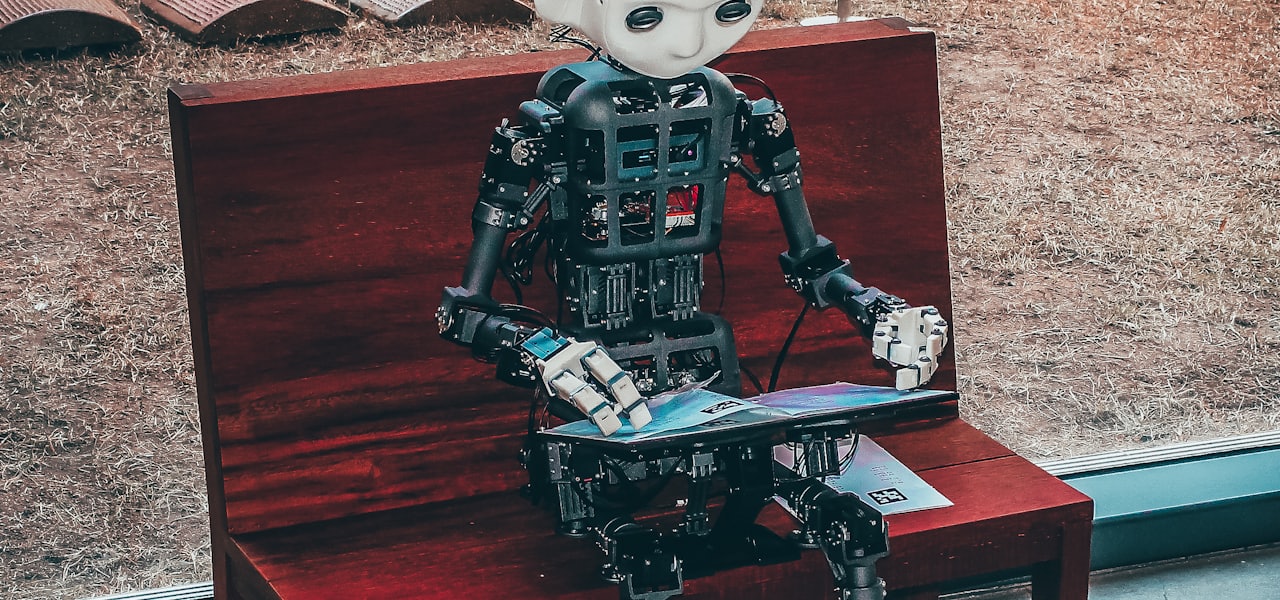
Embodied cognitive science is an interdisciplinary field of research, the aim of which is to explain the mechanisms underlying intelligent behavior. It comprises three main methodologies: the modeling of psychological and biological systems in a holistic manner that considers the mind and body as a single entity; the formation of a common set of general principles of intelligent behavior; and the experimental use of robotic agents in controlled environments. == Contributors == Embodied cognitive science borrows heavily from embodied philosophy and the related research fields of cognitive science, psychology, neuroscience and artificial intelligence. Contributors to the field include: From the perspective of neuroscience, Gerald Edelman of the Neurosciences Institute at La Jolla, Francisco Varela of CNRS in France, and J. A. Scott Kelso of Florida Atlantic University From the perspective of psychology, Lawrence Barsalou, Michael Turvey, Vittorio Guidano and Eleanor Rosch From the perspective of linguistics, Gilles Fauconnier, George Lakoff, Mark Johnson, Leonard Talmy and Mark Turner From the perspective of language acquisition, Eric Lenneberg and Philip Rubin at Haskins Laboratories From the perspective of anthropology, Edwin Hutchins, Bradd Shore, James Wertsch and Merlin Donald. From the perspective of autonomous agent design, early work is sometimes attributed to Rodney Brooks or Valentino Braitenberg From the perspective of artificial intelligence, Understanding Intelligence by Rolf Pfeifer and Christian Scheier or How the Body Shapes the Way We Think, by Rolf Pfeifer and Josh C. Bongard From the perspective of philosophy, Andy Clark, Dan Zahavi, Shaun Gallagher, and Evan Thompson In 1950, Alan Turing proposed that a machine may need a human-like body to think and speak: It can also be maintained that it is best to provide the machine with the best sense organs that money can buy, and then teach it to understand and speak English. That process could follow the normal teaching of a child. Things would be pointed out and named, etc. Again, I do not know what the right answer is, but I think both approaches should be tried. == Traditional cognitive theory == Embodied cognitive science is an alternative theory to cognition in which it minimizes appeals to computational theory of mind in favor of greater emphasis on how an organism's body determines how and what it thinks. Traditional cognitive theory is based mainly around symbol manipulation, in which certain inputs are fed into a processing unit that produces an output. These inputs follow certain rules of syntax, from which the processing unit finds semantic meaning. Thus, an appropriate output is produced. For example, a human's sensory organs are its input devices, and the stimuli obtained from the external environment are fed into the nervous system which serves as the processing unit. From here, the nervous system is able to read the sensory information because it follows a syntactic structure, thus an output is created. This output then creates bodily motions and brings forth behavior and cognition. Of particular note is that cognition is sealed away in the brain, meaning that mental cognition is cut off from the external world and is only possible by the input of sensory information. == The embodied cognitive approach == Embodied cognitive science differs from the traditionalist approach in that it denies the input-output system. This is chiefly due to the problems presented by the Homunculus argument, which concluded that semantic meaning could not be derived from symbols without some kind of inner interpretation. If some little man in a person's head interpreted incoming symbols, then who would interpret the little man's inputs? Because of the specter of an infinite regress, the traditionalist model began to seem less plausible. Thus, embodied cognitive science aims to avoid this problem by defining cognition in three ways. === Physical attributes of the body === The first aspect of embodied cognition examines the role of the physical body, particularly how its properties affect its ability to think. This part attempts to overcome the symbol manipulation component that is a feature of the traditionalist model. Depth perception, for instance, can be better explained under the embodied approach due to the sheer complexity of the action. Depth perception requires that the brain detect the disparate retinal images obtained by the distance of the two eyes. In addition, body and head cues complicate this further. When the head is turned in a given direction, objects in the foreground will appear to move against objects in the background. From this, it is said that some kind of visual processing is occurring without the need of any kind of symbol manipulation. This is because the objects appearing to move the foreground are simply appearing to move. This observation concludes then that depth can be perceived with no intermediate symbol manipulation necessary. A more poignant example exists through examining auditory perception. Generally speaking the greater the distance between the ears, the greater the possible auditory acuity. Also relevant is the amount of density in between the ears, for the strength of the frequency wave alters as it passes through a given medium. The brain's auditory system takes these factors into account as it process information, but again without any need for a symbolic manipulation system. This is because the distance between the ears for example does not need symbols to represent it. The distance itself creates the necessary opportunity for greater auditory acuity. The amount of density between the ears is similar, in that it is the actual amount itself that simply forms the opportunity for frequency alteration. Thus under consideration of the physical properties of the body, a symbolic system is unnecessary and an unhelpful metaphor. === The body's role in the cognitive process === The second aspect draws heavily from George Lakoff's and Mark Johnson's work on concepts. They argued that humans use metaphors whenever possible to better explain their external world. Humans also have a basic stock of concepts in which other concepts can be derived from. These basic concepts include spatial orientations such as up, down, front, and back. Humans can understand what these concepts mean because they can directly experience them from their own bodies. For example, because human movement revolves around standing erect and moving the body in an up-down motion, humans innately have these concepts of up and down. Lakoff and Johnson contend this is similar with other spatial orientations such as front and back too. As mentioned earlier, these basic stocks of spatial concepts are the basis in which other concepts are constructed. Happy and sad for instance are seen now as being up or down respectively. When someone says they are feeling down, what they are really saying is that they feel sad for example. Thus the point here is that true understanding of these concepts is contingent on whether one can have an understanding of the human body. So the argument goes that if one lacked a human body, they could not possibly know what up or down could mean, or how it could relate to emotional states. [I]magine a spherical being living outside of any gravitational field, with no knowledge or imagination of any other kind of experience. What could UP possibly mean to such a being? While this does not mean that such beings would be incapable of expressing emotions in other words, it does mean that they would express emotions differently from humans. Human concepts of happiness and sadness would be different because human would have different bodies. So then an organism's body directly affects how it can think, because it uses metaphors related to its body as the basis of concepts. === Interaction of local environment === A third component of the embodied approach looks at how agents use their immediate environment in cognitive processing. Meaning, the local environment is seen as an actual extension of the body's cognitive process. The example of a personal digital assistant (PDA) is used to better imagine this. Echoing functionalism (philosophy of mind), this point claims that mental states are individuated by their role in a much larger system. So under this premise, the information on a PDA is similar to the information stored in the brain. So then if one thinks information in the brain constitutes mental states, then it must follow that information in the PDA is a cognitive state too. Consider also the role of pen and paper in a complex multiplication problem. The pen and paper are so involved in the cognitive process of solving the problem that it seems ridiculous to say they are somehow different from the process, in very much the same way the PDA is used for information like the brain. Another example examines how humans control and manipulate their environment
Structured sparsity regularization
Structured sparsity regularization is a class of methods, and an area of research in statistical learning theory, that extend and generalize sparsity regularization learning methods. Both sparsity and structured sparsity regularization methods seek to exploit the assumption that the output variable Y {\displaystyle Y} (i.e., response, or dependent variable) to be learned can be described by a reduced number of variables in the input space X {\displaystyle X} (i.e., the domain, space of features or explanatory variables). Sparsity regularization methods focus on selecting the input variables that best describe the output. Structured sparsity regularization methods generalize and extend sparsity regularization methods, by allowing for optimal selection over structures like groups or networks of input variables in X {\displaystyle X} . Common motivation for the use of structured sparsity methods are model interpretability, high-dimensional learning (where dimensionality of X {\displaystyle X} may be higher than the number of observations n {\displaystyle n} ), and reduction of computational complexity. Moreover, structured sparsity methods allow to incorporate prior assumptions on the structure of the input variables, such as overlapping groups, non-overlapping groups, and acyclic graphs. Examples of uses of structured sparsity methods include face recognition, magnetic resonance image (MRI) processing, socio-linguistic analysis in natural language processing, and analysis of genetic expression in breast cancer. == Definition and related concepts == === Sparsity regularization === Consider the linear kernel regularized empirical risk minimization problem with a loss function V ( y i , f ( x ) ) {\displaystyle V(y_{i},f(x))} and the ℓ 0 {\displaystyle \ell _{0}} "norm" as the regularization penalty: min w ∈ R d 1 n ∑ i = 1 n V ( y i , ⟨ w , x i ⟩ ) + λ ‖ w ‖ 0 , {\displaystyle \min _{w\in \mathbb {R} ^{d}}{\frac {1}{n}}\sum _{i=1}^{n}V(y_{i},\langle w,x_{i}\rangle )+\lambda \|w\|_{0},} where x , w ∈ R d {\displaystyle x,w\in \mathbb {R^{d}} } , and ‖ w ‖ 0 {\displaystyle \|w\|_{0}} denotes the ℓ 0 {\displaystyle \ell _{0}} "norm", defined as the number of nonzero entries of the vector w {\displaystyle w} . f ( x ) = ⟨ w , x i ⟩ {\displaystyle f(x)=\langle w,x_{i}\rangle } is said to be sparse if ‖ w ‖ 0 = s < d {\displaystyle \|w\|_{0}=s
The Master Algorithm
The Master Algorithm: How the Quest for the Ultimate Learning Machine Will Remake Our World is a book by Pedro Domingos released in 2015. Domingos wrote the book in order to generate interest from people outside the field. == Overview == The book outlines five approaches of machine learning: inductive reasoning, connectionism, evolutionary computation, Bayes' theorem and analogical modelling. The author explains these tribes to the reader by referring to more understandable processes of logic, connections made in the brain, natural selection, probability and similarity judgments. Throughout the book, it is suggested that each different tribe has the potential to contribute to a unifying "master algorithm". Towards the end of the book the author pictures a "master algorithm" in the near future, where machine learning algorithms asymptotically grow to a perfect understanding of how the world and people in it work. Although the algorithm doesn't yet exist, he briefly reviews his own invention of the Markov logic network. == In the media == In 2016 Bill Gates recommended the book, alongside Nick Bostrom's Superintelligence, as one of two books everyone should read to understand AI. In 2018 the book was noted to be on Chinese Communist Party general secretary Xi Jinping's bookshelf. === Reception === A computer science educator stated in Times Higher Education that the examples are clear and accessible. In contrast, The Economist agreed Domingos "does a good job" but complained that he "constantly invents metaphors that grate or confuse". Kirkus Reviews praised the book, stating that "Readers unfamiliar with logic and computer theory will have a difficult time, but those who persist will discover fascinating insights." A New Scientist review called it "compelling but rather unquestioning".